African countries face important sustainable development challenges. Food security, energy for all, and facilitating water access remain some of the main concerns to ensure the wellbeing of the population. However, these all rely on natural resources that are highly sensitive to climate change and variability. Addressing these development issues will require quantitative modelling tools and an integrated approach to policymaking, ensuring that overlapping goals, interlinked challenges and potential tradeoffs are considered when planning for mid and long-term policies.
To support Ethiopia in this endeavor, UNDESA, UNDP and the Economic Commission for Africa (ECA) are implementing a project that will focus on two areas: 1) the development of an integrated climate, land, energy and water (CLEWs) assessment to identify sectoral interlinkages and trade-offs, and assess alternative scenarios to mitigate unwanted policy outcomes; and 2) support policy coherence and institutional strengthening to facilitate coordination among stakeholders in areas related to sustainable development.
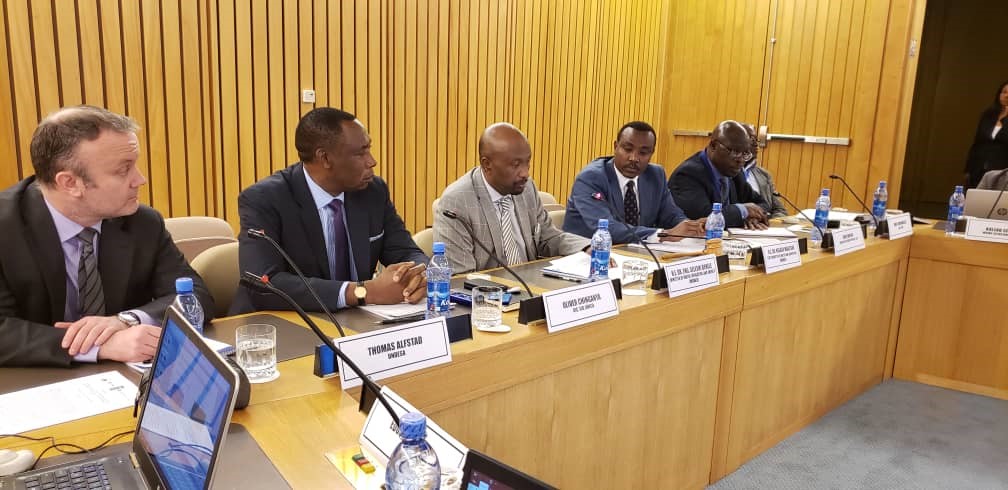
As part of the project, a scoping mission was organized (11–18 January) and a one-day national inception workshop took place in Addis Ababa (17 January). These activities introduced the project’s objectives, the CLEWs framework and the importance of designing coherent policies for sustainable development. The event had the participation of the Minister of Water, irrigation and Electricity, Mr. Seleshi Bekele, and approximately 70 participants from various ministries.