
Mauritius
When: 2023–2025
Purpose: Strengthen national capacity in a SIDS context to conduct integrated climate, land, energy, and water systems analysis for policy coherence, climate resilience, and green-economy planning.
Key insights:
- Mauritius’ nexus choices are shaped by structural import dependence: the country imports about 70% of its food and over 80% of its energy.
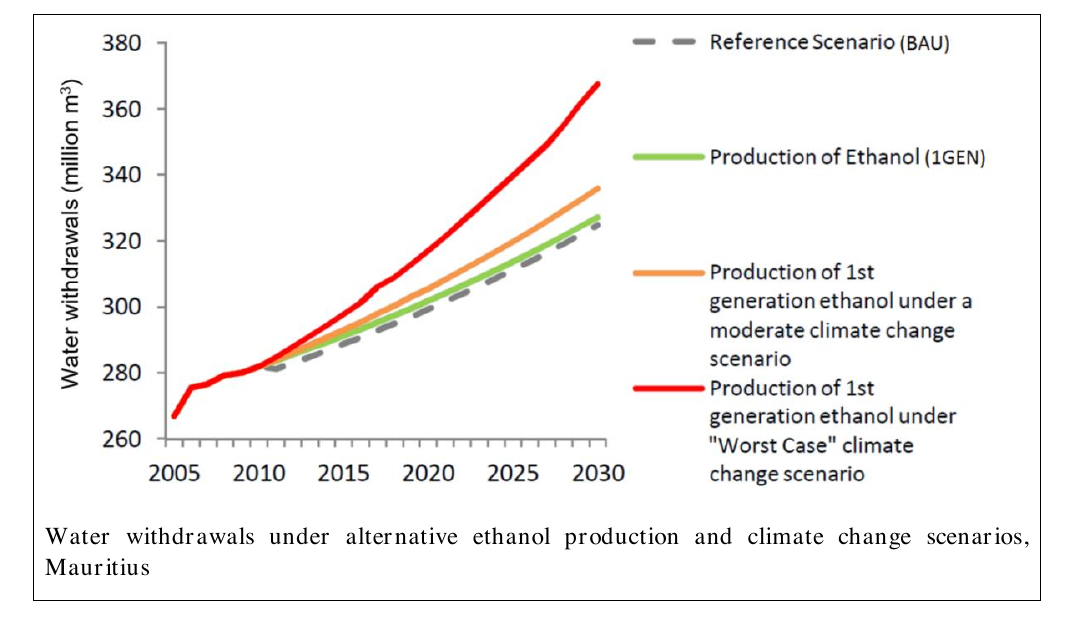
- First-generation ethanol from sugarcane can reduce gasoline imports & GHG emissions, but it increases water & electricity demands for irrigation & pumping.
- Second-generation ethanol can reduce gasoline use further, but diverting bagasse away from electricity generation can increase coal & distillate imports, offsetting part of the benefit.
- Under the worst-case climate scenario, 2030 water withdrawals for first-generation ethanol rise to 370 million m3 (40 million m3 above baseline).
- Reduced precipitation makes rainfed sugarcane less suitable in northern & western areas, strengthening the case for drought-resilient crop choices & irrigation strategies.
Resources: Mauritius CLEWs project draft and IAEA/FAREI CLEW case-study material.
Models: CLEWs
Stakeholders: National Government, FAREI, UN DESA, IAEA.