
Ethiopia
When: 2018–2021
Purpose: Address 3 policy priorities: Modern Agriculture + Manufacturing Sector + Climate-Resilient Green Economy given that Ethiopia’s 10-year National Development Plan (2020–2030) has to face a rapid population growth & urbanization. Together with its economic growth, it results in growing competing demands for resources (land, energy, water) under ongoing climate change impacts.
What happened: The project established an inter-institutional team of experts from various sectors, enabling coherent discussions on national development strategies. A roadmap for institutional integration of CLEWs was developed, and the CLEWs approach was incorporated into the country’s UNSDCF.
Key insights in Agriculture:
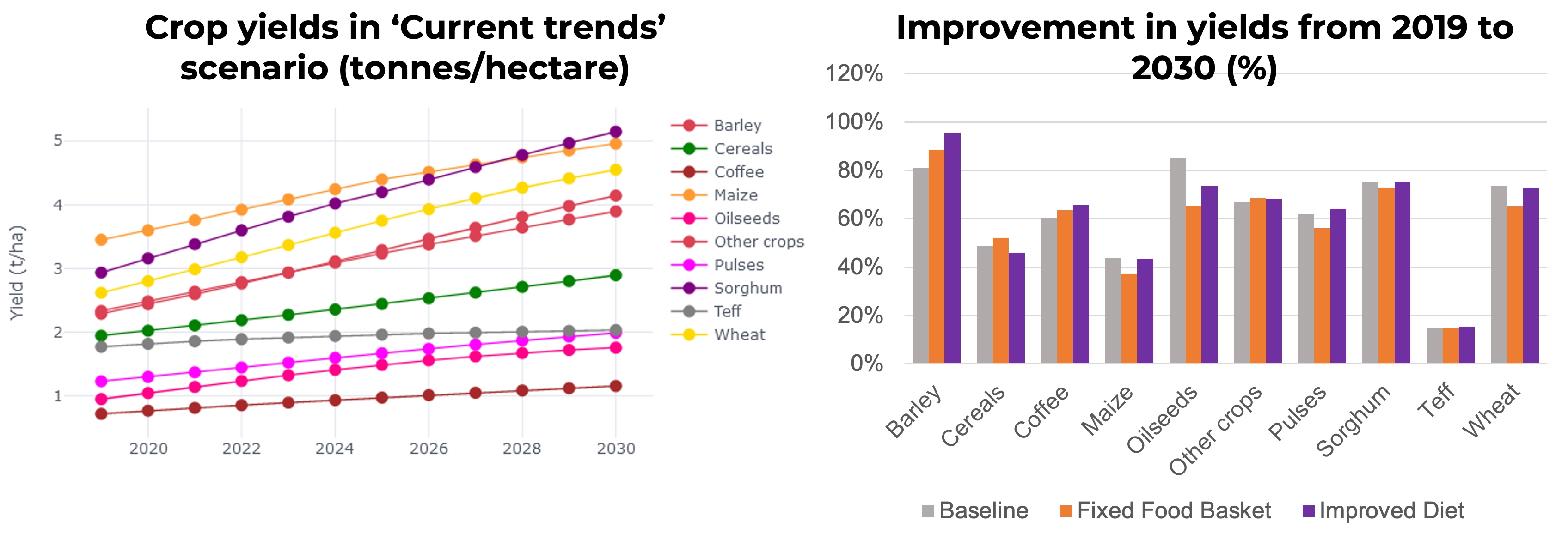
- Substantial potential for modernization of agriculture. Yields could improve by 50 to 110% through greater use of inputs & mechanization.
- Productivity improvements would reduce the need for additional cropland, but does require additional inputs of energy, water, pesticides, and fertilizers.
- Requires substantial increase in investment & inputs. Annual investment would need to be 2-3 times higher than present average.
Key insights in Manufacturing:
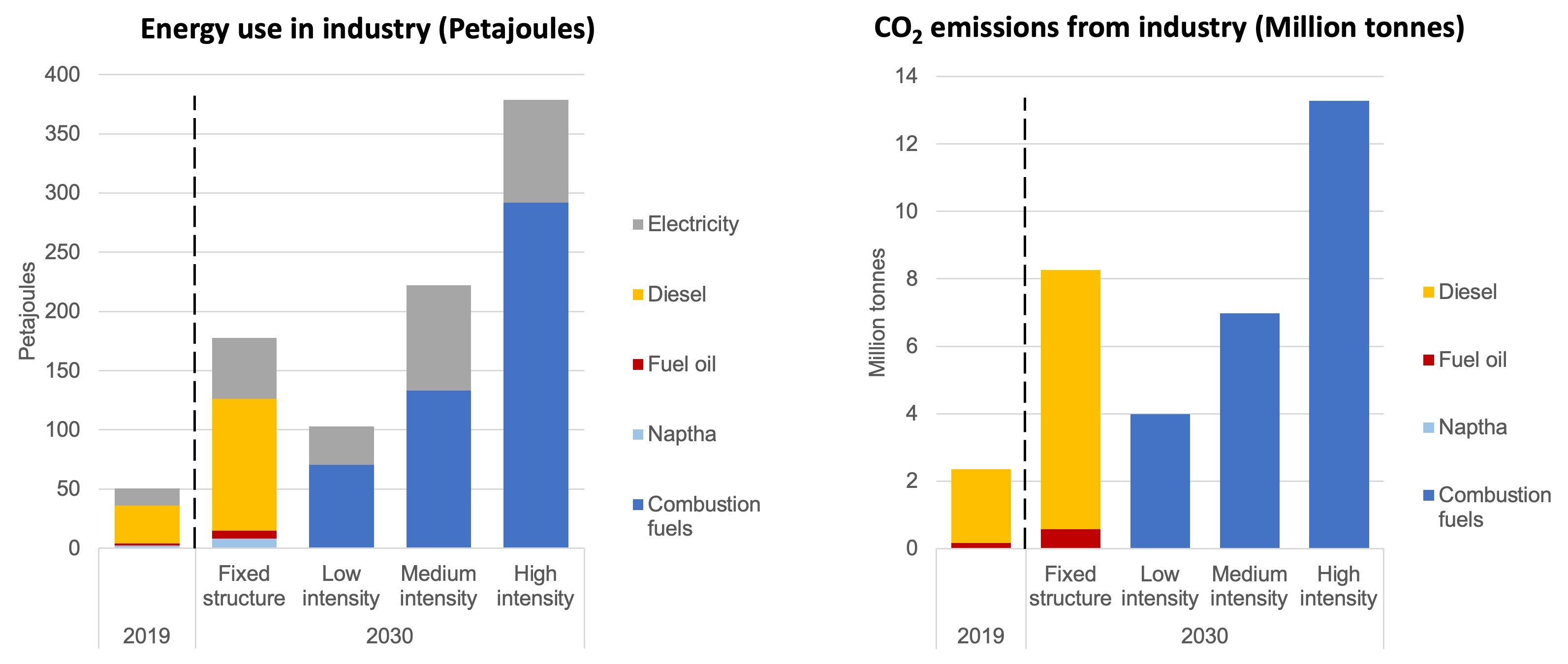
Four scenarios were developed to inform the manufacturing sector’s expansion target. The first assumes a business-as-usual, fixed demand structure with no change in the composition of energy use, combined with a gradual 1.6% annual improvement in energy intensity. The other three scenarios introduce structural shifts in industrial energy demand, aligning it with low, medium, and high energy intensity benchmarks based on the Philippines, Bangladesh, and India, respectively, to reflect alternative pathways of efficiency & industrial development.
- Electricity demand increases significantly, requiring an additional 5–20 TWh for the industrial sector.
- Industrial heat demand rises sharply, with an additional 34–97 PJ of fuels needed for steam & direct heat.
- Emissions increase substantially, reaching 60–270% above 2019 levels.
- Water demand triples for industry, though it remains a relatively small share of total water use.
Key recommendations for Green Economy:
- Reforestation allows for increased sequestration of CO2, offsetting emissions from other sectors.
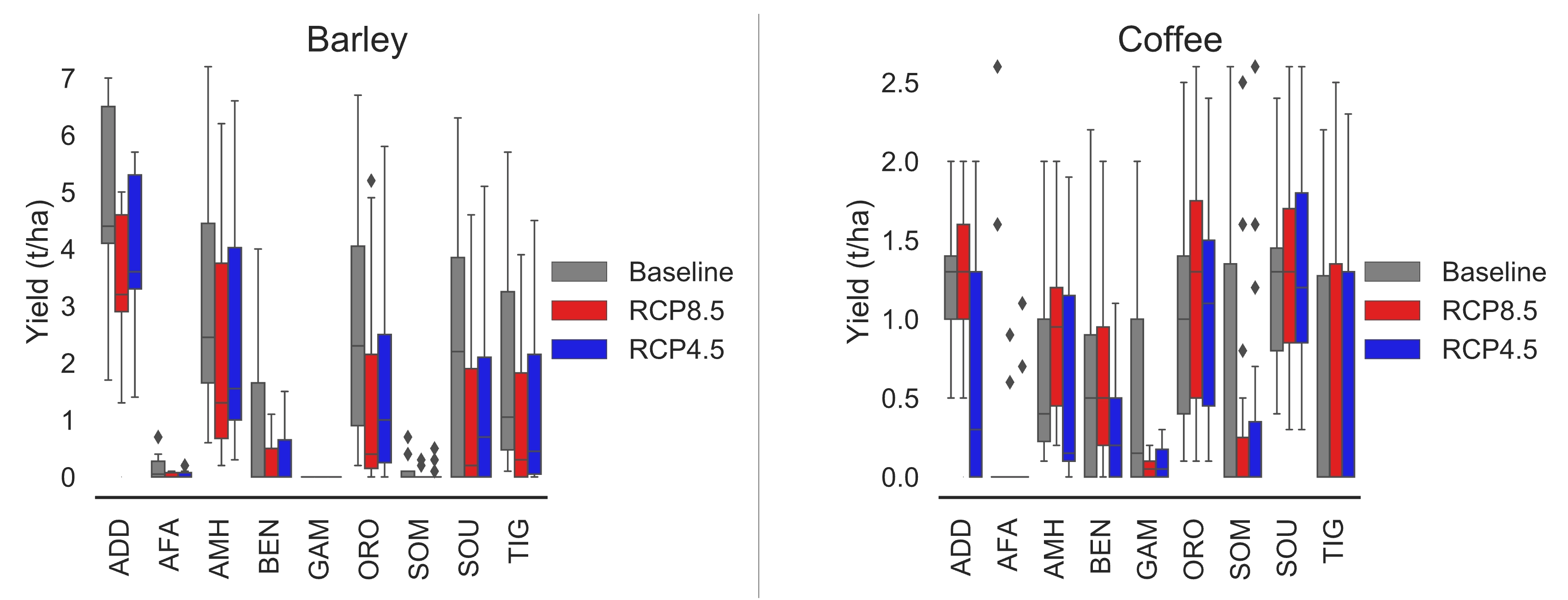
- Crop yields are not significantly affected by climate change, with potential overall increase due to increased rainfall.
- Impacts vary by crop & region, so it’s important not to generalize and consider negative regional impacts for farmers of vulnerable crops.
Models: OSeMOSYS
Stakeholders: The Government of Ethiopia (Ministry of Water, Irrigation and Energy- MoWIE), supported by UN DESA, UNDP, UN ECA, and KTH